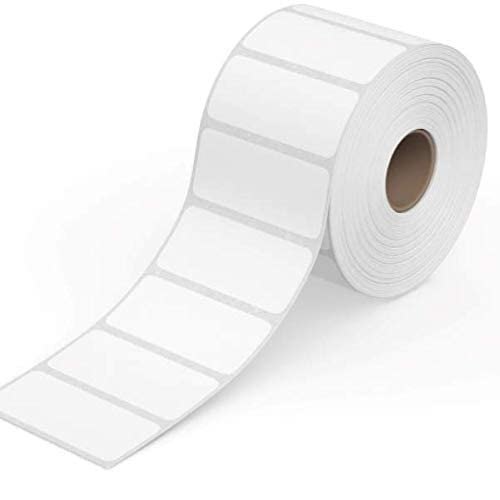
A plain label may look like a simple business consumable, but choosing the wrong one can create bigger operational problems.
Labels that peel away, fail to scan, smudge during printing or do not suit the application surface can slow down packing, inventory management and product identification.
That is why businesses searching for plain labels in Dubai should look beyond size and price.
The right label needs to match the surface, printing method, adhesive requirement, operating environment and intended application.
Whether you need labels for barcodes, shipping, inventory, products, warehouses or general identification, this guide explains what to consider before placing your next order.
What Are Plain Labels?
Plain labels are blank, unprinted labels supplied for businesses to print variable information when required.
Depending on the application, businesses can print information such as:
• Barcodes
• QR codes
• Product information
• Prices
• Batch numbers
• Inventory details
• Shipping information
• Asset identification
• Dates
• Internal tracking information
They are commonly supplied in rolls or other formats suitable for the intended printing and application process.
Plain labels are particularly useful when information changes frequently and therefore cannot be pre-printed in advance.
For example, a warehouse may use the same blank label stock while printing a different barcode and product reference for every item.
Why Choosing the Right Plain Label Matters
Not all blank labels are interchangeable.
A label used on a carton in a controlled warehouse environment can have very different requirements from a label exposed to moisture, temperature changes or frequent handling.
Selecting the wrong specification can result in:
• Labels peeling from the surface
• Poor barcode readability
• Print smudging
• Labels tearing during handling
• Printer compatibility problems
• Unnecessary material waste
• Frequent label replacement
• Operational delays
For businesses purchasing labels in large volumes, even a small specification problem can become expensive when repeated across thousands of labels.
The objective should therefore be to choose a label that is fit for the application, rather than simply choosing the cheapest available option.
How to Choose the Right Plain Labels in Dubai
Before requesting a quotation, there are several important factors to consider.
1. Start With the Application
The first question your label supplier should understand is:
What will the label be used for?
This immediately helps narrow down the appropriate options.
For example, businesses may require plain labels for:
Barcode Printing
Blank barcode labels allow businesses to print variable barcode data when required.
They can support:
• Inventory management
• Product identification
• Warehouse operations
• Retail
• Shipping
• Asset tracking
The label specification should work with the printer, ribbon where applicable, scanning system and intended surface.
Shipping and Logistics
Logistics businesses may need labels for cartons, parcels, pallets and other shipping applications.
Here, readability and adhesion are especially important because labels need to remain attached during handling and transportation.
Product Identification
Manufacturers, distributors and retailers can use blank labels to add variable product information during production or fulfilment.
Warehouse Identification
Warehouses can use plain labels as part of inventory, storage and tracking processes.
The requirements will depend on where labels are applied and the conditions within the facility.
Asset Identification
Some organisations need labels for equipment, tools or other assets.
These applications may require a more durable label specification than a standard paper label, depending on the surface and environment.
2. Choose the Right Label Material
Material selection affects how a label performs.
Rather than assuming one material works for every application, consider the environment in which the label will be used.
Paper Labels
Paper labels can be suitable for many general-purpose applications in controlled environments.
Typical uses can include:
• Retail
• Carton identification
• General barcode printing
• Shipping
• Inventory management
They can be a practical option where additional resistance to demanding conditions is not required.
Synthetic Label Materials
More demanding environments may require synthetic materials.
Depending on the specification, these materials may be considered where labels face:
• Moisture
• Frequent handling
• More challenging environments
• Longer-term identification requirements
The correct choice depends on the actual application.
A business should therefore describe the conditions to its label supplier before deciding on material.
3. Select the Correct Adhesive
The face material is only one part of a self-adhesive label.
The adhesive is equally important.
A label can have excellent print quality but still fail if it does not remain attached to the intended surface.
Permanent Adhesive
Permanent adhesive is suitable for applications where the label needs to remain attached and easy removal is not required.
This can be appropriate for many product, carton, inventory and operational identification applications.
Removable Adhesive
Removable labels may be preferable when the label is temporary and needs to be removed later.
The right adhesive depends on the surface and the intended life of the label.
4. Consider the Application Surface
Before ordering self-adhesive plain labels in Dubai, identify exactly where they will be applied.
For example:
• Cardboard cartons
• Plastic containers
• Glass
• Metal
• Product packaging
• Equipment
• Storage bins
• Other operational surfaces
Surface texture, cleanliness and application conditions can influence adhesion.
A label that performs correctly on a smooth carton may not behave the same way on another surface.
For critical or high-volume applications, testing the label on the actual substrate before committing to a large order can help reduce risk.
5. Choose the Correct Label Size
Label dimensions should be determined by the information being printed and the available application area.
Ask:
• How much information must fit on the label?
• Will it contain a barcode or QR code?
• What is the available surface area?
• Does the label need to fit an existing printer?
• Is there an existing label specification that needs to be matched?
Avoid choosing an unnecessarily large label.
It can increase material consumption without improving performance.
At the same time, a label that is too small can reduce readability and make barcode or variable-data printing more difficult.
6. Check Printer Compatibility
One of the most important considerations when buying blank labels is the printing system.
The labels should be compatible with the equipment being used.
Businesses may use different thermal printing technologies depending on their requirements.
Direct Thermal Printing
Direct thermal systems create the printed image using heat-sensitive label material and do not require a thermal transfer ribbon.
They can be appropriate for applications where the required label life and environment suit direct thermal media.
Thermal Transfer Printing
Thermal transfer printers use a ribbon to transfer the image onto the label material.
This approach can support applications where different combinations of label materials and ribbons are required.
Demegha’s portfolio includes thermal consumables such as wax, resin and near-edge ribbons, alongside barcode printers and scanners. Selecting the label and ribbon as a compatible system can therefore be more effective than purchasing each component independently.
7. Match the Thermal Ribbon to the Label
For thermal transfer applications, the ribbon should be selected according to the label material and required performance.
Common ribbon categories include:
Wax Ribbons
Wax ribbons are commonly associated with general-purpose printing applications, particularly suitable label stocks.
Resin Ribbons
Resin-based options can be considered for more demanding applications and compatible synthetic materials.
Other Ribbon Specifications
Different printers, substrates and environments can require different ribbon formulations or formats.
Instead of choosing a ribbon based only on price, businesses should evaluate:
Printer + Label Material + Ribbon + Application Environment
as one system.
This can improve print performance and reduce avoidable operational issues.
8. Consider Barcode Readability
For barcode labels, appearance is not the only measure of quality.
The barcode needs to scan reliably.
Poor print quality can affect operational efficiency in warehouses, logistics operations and retail environments.
Consider:
• Print clarity
• Label material
• Ribbon compatibility
• Printer settings
• Barcode dimensions
• Scanner compatibility
• Surface condition
A barcode label that frequently requires multiple scan attempts can create delays when multiplied across hundreds or thousands of daily transactions.
9. Think About the Operating Environment
The environment can significantly influence label performance.
Before ordering, determine whether the labels will encounter:
• Heat
• Moisture
• Dust
• Frequent handling
• Temperature changes
• Storage conditions
• Transportation
• Long-term use
Dubai and the wider UAE can present demanding storage and logistics conditions depending on the application.
Providing these details allows your supplier to recommend a more appropriate label specification.
10. Consider Label Roll and Printer Requirements
If your plain labels will be supplied on rolls, dimensions are not the only specification to confirm.
Your supplier may also need information about the printer and roll configuration.
Depending on the system, relevant details can include:
• Label width
• Label height
• Core size
• Roll dimensions
• Printer model
• Printing method
• Quantity per roll
• Required winding or orientation
Providing the printer model is particularly useful when you are unsure about the correct label configuration.
Plain Labels for Different Industries in Dubai and the UAE
Plain labels support operations across many B2B sectors.
Logistics and Warehousing
Warehouses and logistics operations depend heavily on accurate identification.
Plain labels can support:
• Barcode identification
• Carton labels
• Pallet identification
• Inventory management
• Shipping processes
• Internal tracking
For these businesses, labels are not merely stationery.
They are part of the operational infrastructure that keeps products moving.
E-Commerce and Fulfilment
As order volumes increase, e-commerce businesses need reliable labelling processes.
Blank labels can be used for:
• Shipping information
• Barcode identification
• Order tracking
• Inventory
• Fulfilment processes
Reliable label supply is particularly important when high daily order volumes make running out of labels an operational risk.
Retail
Retail businesses may use plain labels for:
• Pricing
• Product identification
• Barcodes
• Inventory
• Internal stock management
The right specification depends on the product, surface, printer and required label life.
Food and Beverage
Food-related businesses may require labels for variable information and internal identification.
However, when a label forms part of regulated product labelling, businesses should verify the relevant UAE requirements before production and application.
Material selection should also reflect the actual storage and application conditions.
Pharmaceutical and Healthcare
Pharmaceutical and healthcare environments can have more demanding identification and traceability requirements.
Label specifications should therefore be selected according to the specific application and applicable requirements rather than assuming a general-purpose blank label will be sufficient.
Manufacturing and Industrial Operations
Manufacturers may use blank labels throughout production and distribution for:
• Work-in-progress identification
• Inventory
• Cartons
• Finished goods
• Assets
• Internal tracking
Different stages of the operation may require different materials and adhesives.
Plain Labels vs Pre-Printed Labels: Which Do You Need?
Both options have a place.
The correct choice depends on whether the information remains fixed or changes.
Choose Plain Labels When:
• Information changes frequently
• Barcodes are generated dynamically
• Each shipment requires different information
• Products require variable data
• Labels are printed on demand
• Inventory information changes regularly
Choose Pre-Printed Labels When:
• The same design is used repeatedly
• Branding remains consistent
• Information does not change
• Full-colour graphics are required
• Large quantities of identical labels are needed
Some businesses require both.
For example, a product may use a professionally printed branded label alongside a plain thermal label carrying variable barcode, batch or logistics information.
Working with a supplier capable of supporting both requirements can simplify sourcing.
What Information Should You Provide When Requesting a Quote?
Sending complete specifications can help reduce unnecessary back-and-forth with your supplier.
Before requesting a quote for plain labels in Dubai, prepare as much of the following information as possible:
1. Label width and height
2. Required quantity
3. Material, if known
4. Application surface
5. Intended use
6. Printer make and model
7. Direct thermal or thermal transfer requirement
8. Ribbon type, if applicable
9. Operating environment
10. Roll/core requirements, if known
11. Delivery location
12. Expected reorder frequency
If you do not know all the technical details, provide the application and printer information first.
A capable supplier should help you identify the remaining specification.
Why Reliable Supply Matters for Plain Labels
Plain labels are often recurring consumables.
That changes how procurement teams should evaluate suppliers.
Saving a small amount per roll may offer little value if inconsistent availability later interrupts warehouse, packing or production processes.
Businesses should consider:
• Product consistency
• Reorder reliability
• Delivery capability
• Technical compatibility
• Response time
• Ability to supply related consumables
This is particularly important for logistics, e-commerce and manufacturing businesses where labels are used every day.
Procurement should evaluate total operational reliability, not simply unit price.
Why Choose Demegha for Plain Labels in Dubai and the UAE?
Demegha provides plain and printed self-adhesive labels as part of a wider labelling, packaging and barcode solutions portfolio for businesses across the UAE and regional markets.
The advantage is that businesses can source more than a roll of blank labels.
Demegha’s offering includes:
• Plain self-adhesive labels
• Printed labels
• Barcode labels
• Asset labels
• Thermal transfer ribbons
• Barcode printers and scanners
• Flexible packaging
• Related packaging consumables
This creates a practical advantage for procurement and operations teams.
Instead of managing separate suppliers for labels, ribbons and barcode hardware, businesses can consolidate related requirements through one supplier.
Demegha’s hybrid model of custom solutions alongside stocking and distribution is also particularly relevant for frequently reordered consumables such as labels and thermal ribbons.
Choose Labels Based on the Application, Not Just the Price
There is no single plain label that is right for every business.
The best specification depends on:
Application + Surface + Material + Adhesive + Printer + Environment
Getting these factors right can improve print performance, barcode readability and operational reliability while reducing unnecessary waste and replacement.
If you are searching for plain labels in Dubai or the UAE, Demegha can help you identify a suitable solution based on your printer, application and business requirements.
Send us your label size, printer model, application and required quantity to request a customised quote.