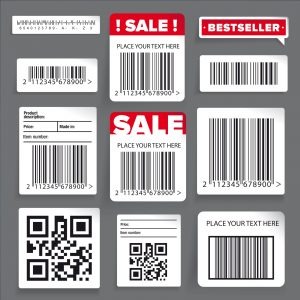
A well-organized warehouse depends on one simple principle: every item should be easy to locate, identify and track.
When rack locations are unclear, warehouse teams can spend unnecessary time searching for products, verifying locations or correcting picking errors. As inventory volumes grow, these small inefficiencies can quickly become operational problems.
That is why rack labels in Dubai are an important part of an effective warehouse identification system.
From simple location labels to scannable barcode rack labels, the right system can help warehouses create consistent storage locations, improve inventory visibility and support faster day-to-day operations.
But choosing rack labels involves more than printing numbers on stickers.
Label material, barcode format, size, adhesive, scanning distance and warehouse conditions all need to be considered.
This guide explains how businesses in Dubai and across the UAE can choose rack labels that support better warehouse organization and inventory management.
What Are Warehouse Rack Labels?
Rack labels are identification labels attached to warehouse racks, shelves, beams or other storage locations.
Each label represents a specific warehouse location.
Depending on the warehouse system, a rack label may include:
• Aisle number
• Rack number
• Bay number
• Shelf or level
• Bin location
• Barcode
• QR code
• Alphanumeric location code
• Colour coding
For example, a location could be identified as:
A03-R05-L02
This could represent Aisle 3, Rack 5 and Level 2.
When location codes are combined with barcodes, warehouse employees can scan locations instead of manually entering them into an inventory or warehouse management system.
The result is a more structured approach to storing, locating, picking and moving inventory.
Why Rack Labels Matter for Warehouse Operations
As warehouses grow, relying on memory or informal location identification becomes increasingly difficult.
Employees need a consistent system that tells them exactly where inventory belongs.
Rack labels create that physical identification layer.
A properly planned rack labelling system can support:
• Faster product location
• More consistent put-away
• Easier stock identification
• Faster picking
• Improved barcode scanning
• Better inventory control
• Easier staff training
• More structured warehouse operations
For logistics, distribution, e-commerce and industrial businesses, these improvements can become significant when repeated across hundreds or thousands of daily warehouse movements.
How Rack Labels Improve Warehouse Organization
Create Clearly Defined Storage Locations
The foundation of warehouse organization is a logical location system.
Without clear identifiers, workers may describe locations informally, creating confusion between shifts or employees.
Rack labels provide a consistent reference.
Instead of saying:
“Second rack near the loading area, third shelf.”
the warehouse can use a structured code such as:
B02-R03-L03
This makes locations easier to communicate, document and integrate into inventory systems.
Support Consistent Put-Away
When goods arrive, warehouse employees need to know where they should be stored.
Clearly identified racks help employees confirm the correct location before placing inventory.
This becomes particularly important when warehouses handle:
• Large numbers of SKUs
• Similar-looking products
• Multiple product categories
• High daily inbound volumes
• Multiple storage zones
Consistent location identification reduces dependence on individual employee knowledge.
Simplify Picking
Picking efficiency depends heavily on finding the correct location quickly.
Clear rack labels allow pickers to confirm that they have reached the intended storage position.
When barcode scanning is integrated into the process, the employee can scan the rack location as part of the picking workflow.
This provides an additional verification point before inventory is moved.
Rack Labels and Inventory Management
Warehouse labels are not only visual signs.
When combined with barcode technology and inventory systems, they become part of a broader tracking infrastructure.
Barcode Rack Labels
A barcode rack label converts a physical storage location into a machine-readable identifier.
Instead of typing a location manually, an employee scans the barcode.
This can help support workflows such as:
Receive → Identify → Put Away → Scan Location → Store → Pick → Verify → Dispatch
The exact workflow depends on the warehouse management or inventory system being used.
Reducing Manual Data Entry
Manual entry creates opportunities for mistakes.
For example, codes such as:
A01-R05-L08
and
A01-R05-L06
can be easily confused when employees are working quickly.
Barcode scanning can reduce the amount of manual typing required during warehouse processes.
Supporting Inventory Accuracy
Rack labels do not automatically make inventory accurate.
They provide the location-identification infrastructure that can support accurate inventory processes.
When employees consistently scan the correct product and correct storage location, businesses can create a stronger connection between physical inventory and system records.
How to Choose the Right Rack Labels in Dubai
Not every warehouse requires the same label specification.
A label suitable for a clean, temperature-controlled storage facility may not be appropriate for a more demanding industrial environment.
Before ordering warehouse rack labels in Dubai, consider the following factors.
1. Understand the Application Surface
Start by identifying where the label will be installed.
Common surfaces include:
• Metal rack beams
• Shelving
• Storage bins
• Pallet locations
• Plastic containers
• Warehouse equipment
The surface affects material and adhesive selection.
Before ordering a large quantity, providing the supplier with information about the actual rack or shelving surface can help identify a more appropriate solution.
For critical applications, testing a sample on the actual surface is useful before full production.
2. Choose the Right Label Material
Material selection should be based on warehouse conditions.
Important considerations include:
• Expected label lifespan
• Temperature
• Dust
• Moisture
• Frequent handling
• Cleaning processes
• Surface condition
• Indoor or exposed environment
A standard label may be sufficient for some warehouse environments, while other applications may require a more durable material.
The key is to avoid over-specifying or under-specifying.
An unnecessarily expensive material increases cost, while a material that cannot handle the environment may require frequent replacement.
3. Select the Correct Adhesive
Adhesive performance is critical for self-adhesive rack labels.
A barcode is useless if the label starts peeling from the rack.
Permanent adhesive may be appropriate for long-term rack identification where locations are unlikely to change frequently.
However, warehouses that regularly reorganize storage layouts may need to consider how easily location identifiers can be changed.
The correct adhesive depends on:
Surface + Environment + Expected Life + Reconfiguration Requirements
These factors should be discussed before production.
4. Determine the Correct Label Size
Rack label size should not be chosen based only on available space.
It also needs to account for viewing and scanning distance.
A small barcode may work well when employees scan it from close range.
But if the label needs to be identified from farther away, a different size or identification approach may be required.
Consider:
• Rack dimensions
• Barcode size
• Scanner distance
• Human-readable text
• Location code length
• Installation position
Your warehouse team should be able to identify the location easily without unnecessary searching.
5. Make Location Codes Easy to Understand
A good rack identification system should be logical.
Avoid unnecessarily complicated codes.
A location hierarchy might follow:
Zone → Aisle → Rack → Level → Position
For example:
Z1-A04-R07-L03-P02
Whatever structure your business chooses, it should remain consistent across the warehouse.
Employees should be able to understand the basic logic without memorizing hundreds of individual locations.
6. Consider Barcode Compatibility
If rack labels will contain barcodes, they need to work with the warehouse’s scanning equipment and software.
Before production, confirm:
• Barcode format
• Required data
• Barcode dimensions
• Scanner type
• Scanning distance
• Warehouse software requirements
• Label placement
Testing is important.
A barcode that looks correct on artwork should still be tested using the actual scanners and operating conditions before a full warehouse rollout.
7. Think About Scanning Distance
One frequently overlooked consideration is how far away employees will be when scanning the label.
A worker standing directly beside a lower rack location has different requirements from someone trying to identify a location positioned higher on warehouse racking.
The appropriate label size and barcode configuration should therefore reflect the real scanning environment.
For difficult-to-reach locations, warehouses may also consider alternative placement strategies that make the location identifier easier to access.
8. Use Colour Coding Carefully
Colour can provide an additional visual layer to warehouse organization.
For example, different colours could represent:
• Warehouse zones
• Product categories
• Storage areas
• Picking areas
• Special handling sections
Colour coding can help employees orient themselves quickly.
However, colour should support the identification system rather than replace clear text or barcode information.
The location should still be understandable when the colour alone is not visible or distinguishable.
9. Make Human-Readable Information Clear
Even when a warehouse uses barcode scanning, employees should be able to read the location code without a scanner.
A good rack label typically combines:
Barcode + Clear Location Code
This provides both machine-readable and human-readable identification.
Avoid:
• Fonts that are too small
• Unnecessary text
• Weak contrast
• Crowded layouts
• Complicated graphics
Warehouse labels should prioritize function over decoration.
Different Types of Warehouse Identification Labels
A complete warehouse may require more than one type of label.
Rack Labels
Used to identify racks, beams, shelves and storage positions.
Barcode Location Labels
Combine a warehouse location code with a scannable barcode.
Bin Labels
Used for smaller storage bins and individual picking locations.
Pallet Location Labels
Help identify areas designated for pallet storage.
Asset Labels
Used to identify equipment and other business assets rather than inventory storage locations.
Floor and Zone Identification
Larger visual identification may be used to distinguish warehouse areas, aisles or operational zones.
A well-designed system brings these different identification methods together rather than treating each label as an isolated product.
Rack Labels for Different Warehouse Environments
E-Commerce Fulfilment Centres
E-commerce warehouses can process large numbers of SKUs and orders.
Rack and bin identification can support faster:
• Put-away
• Picking
• Inventory checks
• Order fulfilment
As order volumes increase, clear location identification becomes increasingly important.
Logistics and 3PL Warehouses
Third-party logistics businesses may manage inventory for multiple customers.
Structured rack labels can help separate locations and support consistent processes across different accounts and product categories.
Retail Distribution Centres
Distribution centres supplying stores may handle large volumes of stock movements.
Rack labels support systematic storage and retrieval as inventory moves between receiving, storage, picking and dispatch.
Manufacturing Warehouses
Manufacturers can use rack labels to identify:
• Raw material locations
• Components
• Work-in-progress storage
• Finished goods
• Spare parts
Clear identification can improve coordination between warehouse and production teams.
Food and Pharmaceutical Operations
Food and pharmaceutical businesses may have additional operational, traceability and compliance requirements.
Rack labels should be selected according to the actual facility conditions and applicable internal or regulatory requirements.
Rack Labels, Barcode Labels and Asset Labels: What’s the Difference?
These terms are sometimes used interchangeably, but they can serve different purposes.
Rack labels identify storage locations.
Barcode labels is a broader category referring to labels carrying machine-readable barcode information.
Asset labels identify physical business assets such as equipment, tools or devices.
For example, a warehouse scanner may have an asset label identifying the device, while the rack it is scanning has a barcode rack label identifying the storage location.
Understanding the difference helps businesses build a more complete identification system.
Common Warehouse Rack Labelling Mistakes
Using Labels That Are Too Small
Small labels can be difficult to read and scan, particularly when racks are large or positioned above eye level.
Poor Label Placement
A high-quality label will still create problems if it is installed where employees cannot easily see or scan it.
Inconsistent Location Codes
Changing naming structures between warehouse sections creates confusion.
Define the location system before producing labels.
Ignoring the Surface
Labels should be selected for the surface on which they will actually be applied.
Choosing Labels Based Only on Price
The cheapest label may become expensive if it peels, becomes unreadable or requires frequent replacement.
Printing Everything Before Testing
For a large warehouse rollout, test the proposed labels, barcodes and scanning process first.
Correcting an issue during a pilot is easier than replacing thousands of installed labels.
How to Plan a Warehouse Rack Labelling Project
For businesses introducing or upgrading rack labels, a structured approach can make implementation easier.
Step 1: Map the Warehouse
Document zones, aisles, racks, levels and storage positions.
Step 2: Create the Location Structure
Define a logical naming convention and apply it consistently.
Step 3: Review the Environment
Identify rack surfaces, temperatures, dust, moisture and other relevant conditions.
Step 4: Confirm Barcode Requirements
Coordinate with your inventory system, WMS and scanner setup.
Step 5: Select the Label Specification
Choose material, adhesive, size and print requirements according to the application.
Step 6: Produce and Test Samples
Install sample labels in representative warehouse locations.
Test both readability and scanning.
Step 7: Roll Out the System
Once the specification has been validated, proceed with broader production and installation.
Step 8: Maintain Consistency
Keep records of label specifications and location structures so new warehouse areas can follow the same system.
What Information Should You Provide When Requesting Rack Labels?
Before requesting a quote for rack labels in Dubai, prepare as much of the following information as possible:
1. Required label dimensions
2. Approximate quantity
3. Rack or surface material
4. Indoor/environmental conditions
5. Required location coding structure
6. Barcode type, if applicable
7. Scanner model or scanning requirements
8. Expected scanning distance
9. Required material, if already specified
10. Installation or application requirements
11. Warehouse location
12. Required delivery date
Providing these details makes it easier to recommend a solution based on actual warehouse requirements.
Why Choose Demegha for Rack Labels and Warehouse Identification Solutions?
Warehouse identification works best when labels, printers, scanners and consumables are considered together.
Demegha supports UAE businesses with a wider range of labelling and barcode identification solutions, including:
• Custom rack and identification labels
• Barcode labels
• Asset labels
• Plain self-adhesive labels
• Barcode printers
• Barcode scanners
• Thermal transfer ribbons
• Related packaging and warehouse consumables
For procurement and warehouse teams, this creates an important advantage.
Instead of sourcing labels from one supplier, ribbons from another and barcode equipment from a third, related requirements can be consolidated through a single supplier.
This can simplify procurement while helping businesses build a more consistent warehouse identification system.
Build a Better Organized Warehouse
Effective warehouse organization starts with knowing exactly where everything belongs.
Rack labels provide the physical identification layer that connects warehouse locations, employees and inventory systems.
But successful implementation requires more than simply printing location numbers.
Businesses should consider:
Location Structure + Material + Adhesive + Barcode + Scanner + Placement + Environment
Getting these elements right can support faster identification, more efficient picking and stronger inventory management.
If you are looking for rack labels in Dubai or anywhere in the UAE, Demegha can help you develop labels suited to your warehouse layout, scanning requirements and operating environment.
Send us your rack dimensions, label requirements, barcode details and warehouse application to request a customized quote.